Binding Techniques: The Perfect Finish for Your Quilt
You've pieced, pressed, and quilted your masterpiece – now it's time for the grand finale: binding! It's the frame that showcases all your hard work.
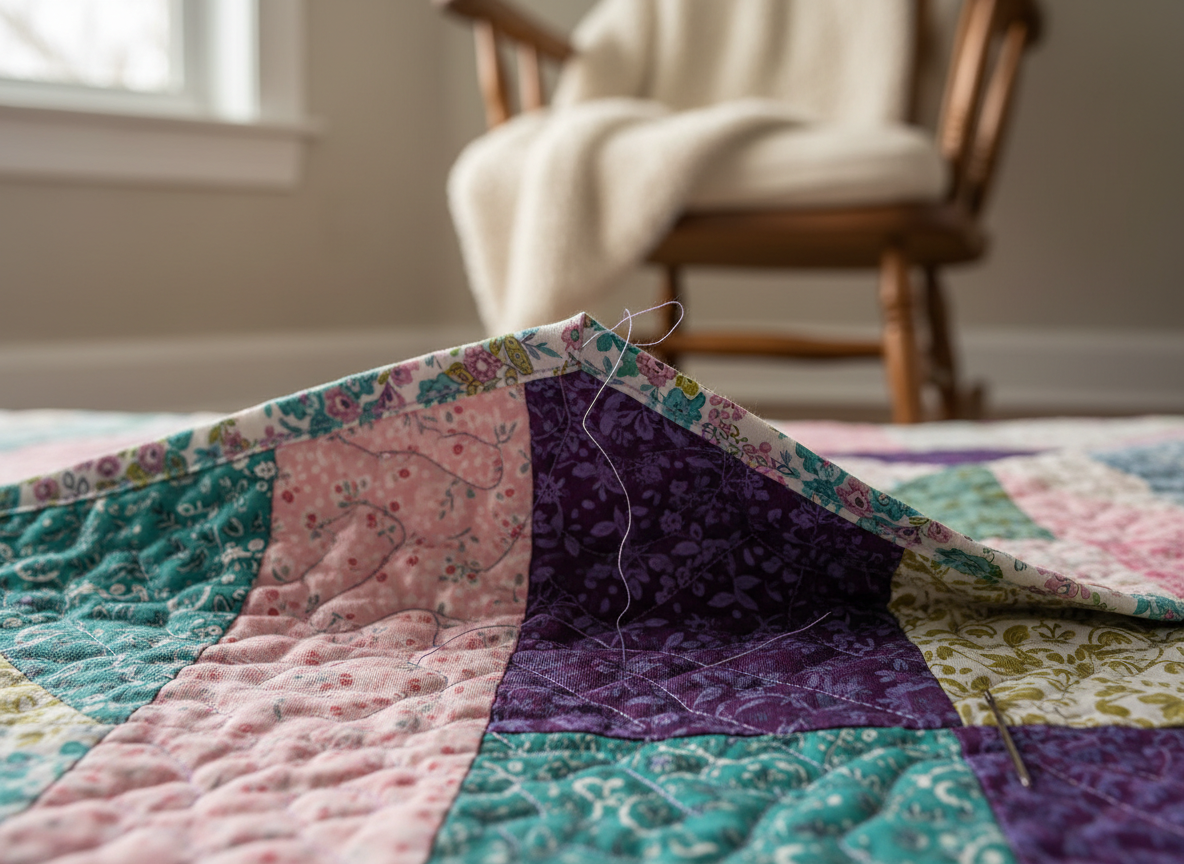
At The Quilting Quilter, we believe binding is more than just finishing the edges. It's the frame that showcases all your hard work and gives your quilt that polished, professional look.
Why Binding Matters
Think of binding as the finishing touch that:
- Protects your quilt edges from wear and tear
- Frames your design like a picture frame
- Shows your attention to detail and craftsmanship
- Can add a pop of color or tie everything together
A well-executed binding makes all the difference between "homemade" and "handcrafted."
Choosing Your Binding Fabric
Your binding choice sets the tone for your entire quilt:
- Matching binding – Creates a seamless, cohesive look
- Contrasting binding – Acts as a bold frame and makes your quilt pop
- Scrappy binding – Fun and playful, perfect for scrappy quilts
- Striped binding – Adds visual interest and a professional touch
Our Aurora Fabrics collection includes coordinating prints that work beautifully as binding – or choose a complementary solid for a clean finish.
Preparing Your Binding Strips
Most quilters use 2.5-inch strips for binding. Here's how to prepare them:
- Cut your strips on the straight grain (or bias for curved edges)
- Join strips at 45-degree angles to reduce bulk
- Press seams open for a smooth finish
- Fold in half lengthwise and press with your iron
Using our Aurora Spin & Press tool makes this step easier and more accurate!
The Double-Fold Method (Most Popular)
This technique creates a durable, professional binding:
- Align raw edges of binding with quilt top
- Sew with ¼-inch seam using a walking foot
- Miter corners at 45 degrees for neat, crisp angles
- Fold binding to the back
- Hand-stitch the folded edge to the backing
💡 Pro Tip: Take your time with corners – they're what people notice first!
Machine Binding (Faster Alternative)
Short on time? Machine binding is perfectly acceptable:
- Attach binding to the back first (opposite of hand binding)
- Fold to the front and topstitch close to the edge
- Use a walking foot to prevent shifting
- Go slowly around corners for neat results
The key is consistency – keep your stitching line even all the way around.
Mitering Corners Like a Pro
Perfect corners take practice, but here's the secret:
- Stop ¼ inch from the corner
- Backstitch and remove the quilt
- Fold binding up at 45 degrees
- Fold back down even with the next edge
- Start sewing from the edge
Practice on a sample sandwich first – you'll get the hang of it quickly!
Joining Binding Ends
This is where many quilters get nervous, but it's easier than you think:
- Leave 10-12 inches unsewn at the start
- Overlap ends and mark where they meet
- Join at 45 degrees just like your other seams
- Trim excess and finish sewing
A smooth join is the mark of a careful quilter!
Creative Binding Ideas
Once you've mastered the basics, try these variations:
- Scrappy binding – Use leftover strips for a fun, eclectic look
- Piped binding – Add a thin strip of contrasting fabric for a pop
- Faced binding – No binding shows on the front (modern and clean)
- Flanged binding – A decorative strip peeks out from the edge
Don't be afraid to experiment and make your quilt uniquely yours!
Your Quilt Deserves a Beautiful Finish
Binding might be the last step, but it's definitely not the least important. With these techniques and a little practice, you'll create finishes that make your quilts look gallery-worthy.
You're almost there – finish strong! 🧵✨
Ready to Finish Your Masterpiece?
Explore our Aurora Fabrics collection for the perfect binding fabric. Join our free monthly newsletter for more finishing techniques and quilting tips!